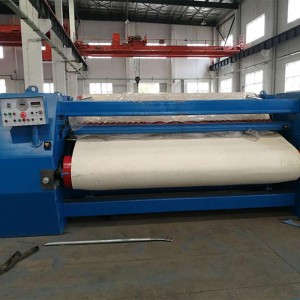
Automatic dosing system
Features
High-precision weighing & temperature control: The weighing control accuracy can reach ±50g, and the temperature control accuracy is ±1.0°C, meeting the strict requirements of the tanning process for chemical material metering and liquid temperature.
Multi-chemical compatibility: It can manage up to 23 types of chemicals, supporting liquid material pumping and powder scanning, weighing, and dosing, covering the complete formulation needs of both main and auxiliary materials.
Full-process automation: From storage and supply, weighing, dissolving, conveying to drum feeding, the entire process requires no manual intervention. The feeding speed is >60 L/min (excluding high viscosity), significantly reducing auxiliary labor hours.
Digital recipe management: Process recipes are permanently stored in the system, accessible with one click, eliminating human errors such as incorrect or omitted additions, and ensuring consistency across batches.
Full data traceability: Automatically record parameters such as the type of chemical material, dosage, water temperature, and feeding time for each batch, supporting production traceability and cost accounting.
Safety & reliability: The key valves and sensors are sourced from imported brands, ensuring a low failure rate. Automatic temperature control prevents the risk of accidents, such as leather or personnel being scalded by hot water.
Parameters
| Chemical Types | Up to 23 |
| Weighing Accuracy | ±50 g |
| Temperature Accuracy | ±1.0 °C |
| Dosing Rate | >60 L/min(excluding high-viscosity chemicals) |
| Recipe Management | Recipe storage, one-touch recall, access control |
| Data Logging | Automatic logging of chemical type, dosage, temperature, time |
| Control Mode | Auto/manual switchable |
| Key Components | Imported valves and sensors |
| Interlocking | Interlocked with drum rotation & water supply |
Applications
Tanning & Retanning: Chrome powder, synthetic tanning agent, sodium formate, baking soda, etc. are precisely added in sequence to ensure uniform tanning penetration.
Dyeing & Fatliquoring: High-precision metering and warm water dilution of dyes, oils, and auxiliaries to enhance color consistency and absorption rate.
Liming & Deliming: Automated dosing of bulk chemicals such as lime, sodium sulfide, and ammonium salts to reduce exposure to dust and odors.
Pickling & pH adjustment: Cooperate with the formic acid automatic feeding system to achieve precise closed-loop control of pH.
FAQ
Q1: Can the system be compatible with existing old drums?
A: Yes, the system adopts a modular design. The dosing pipeline is connected to the drum material inlet or a dedicated feeding valve. The control system can operate independently or be integrated into the existing PLC, without the need to replace the main body of the drum. For drums in operation, the modification process is short and does not affect the normal production schedule.
Q2: Can high-viscosity materials (such as certain oils and fats) be automatically dosed?
A: The system is standardly equipped for conventional liquid materials, with a feeding rate of >60 L/min. For high-viscosity materials, optional configurations such as insulated pipelines, screw pumps, or pressurized conveying modules can be added. Specific solutions need to be customized based on the material's viscosity parameters.
Q3: How can automatic weighing of powdered materials be achieved?
A: Powder materials are processed through a scanning and weighing feeding station. After the operator scans and confirms the material, the system guides the weighing to the target value and records it. Subsequently, the material is conveyed into a dissolving tank or directly into a drum, balancing accuracy and dust control.
Q4: How does the system ensure consistency in the quality of leather from different batches?
A: The core lies in the digitalization of formulas and automation of execution. The type of chemical, dosage, water temperature, feeding sequence, and time for each process are automatically executed according to the preset formula, eliminating manual operational differences and significantly narrowing batch-to-batch fluctuations.
Q5: Can the data be integrated with the factory's MES or ERP system?
A: Yes, the system has reserved data interfaces that support docking with factory-level MES/ERP platforms, enabling automatic aggregation of material consumption, batch cost accounting, and generation of production reports, thus establishing a traceability link from the equipment level to the management level.