


Automatic Drum Water Supply System for Leather Processing
Features
Precise temperature control:±1℃ accuracy prevents uneven shrinkage and dyeing inconsistencies caused by temperature deviation
Accurate water dosing:±2.0% volume accuracy with <10L display resolution ensures each drum receives the exact water volume per recipe
Water & cost savings:Approximately 30% reduction in water consumption and associated wastewater treatment costs compared to manual operation
High-speed filling:WS-80 at 800–1200 L/min; WS-100 at 1500–2000 L/min—significantly reducing process waiting time
Data traceability:Temperature and volume data logged automatically, integrated with recipe management for full traceability
Manual/auto dual mode:Manual override retained for emergency operation, ensuring production continuity
Parameters
| Model | WS-80 / WS-100 |
| Temperature Accuracy | ±1°C |
| Volume Accuracy | ±2.0% ( display resolution <10L) |
| Filling Rate | WS-80: 800-1200 L/min; WS-100: 1500-2000 L/min |
| Temperature Range | Configurable per process requirements |
| Drum Capacity | Multiple drums per system, depending on configuration |
| Data Logging | Automatic logging of temperature, volume, and time |
| Control Mode | Auto/manual switchable |
| Key Components | Imported valves and sensors (reference configuration) |
Applications
· Wet processing operations:Automated water supply and temperature control for soaking, liming, unhairing, bating, pickling, tanning, dyeing, and fatliquoring in drums.
· Medium-to-large tanneries:Centralized water supply management covering 8–12 drums per system (depending on configuration), with unified scheduling and data logging.
· Quality-critical production: Automotive interior leather, premium upper leather, and export-oriented lines requiring batch consistency and traceability.
· Smart tannery integration: Functions as part of a wet-process automation ecosystem, linking with automatic dosing, formic acid feeding, and powder dispensing systems to build a fully digital workshop.
FAQ
Q1: Can the system be compatible with existing drums? How difficult is the retrofit?
A: The system is designed for compatibility with existing drums. Automation is achieved by adding a mixing station, valves, sensors, and a control cabinet to the water supply line—no drum replacement is required. Retrofit time depends on existing piping layout and drum count, typically several days to one week per system. On-site survey by the manufacturer is recommended before finalizing the retrofit plan.
Q2: How significant is ±1℃ temperature accuracy for leather quality in practice?
A: A temperature deviation of 2–3℃ during leather processing can cause measurable differences in shrinkage and dyeing uniformity. ±1℃ accuracy ensures highly consistent process conditions between batches—critical for automotive leather and export orders with strict color and physical property requirements. Combined with data logging, water supply parameters for each batch are traceable for quality analysis and customer audits.
Q3: How does the system achieve 30% water savings? Where does the saved water mainly come from?
A: Water savings come from three sources: (1) precise dosing eliminates overfilling and “eyeball estimation” waste in manual operation; (2) accurate temperature control reduces repeated water changes due to off-spec temperature; (3) recipe-based management ensures each drum draws exactly the required volume, avoiding habitual over-addition. Wastewater treatment savings follow directly from the reduced total discharge volume.
Q4: If the system fails, will production be interrupted?
A: The system includes a standard manual/auto switch. If the automatic control section malfunctions, operators can switch to manual mode and continue water filling via local valves, keeping production running. Critical sensors (such as temperature detection) typically use redundant or dual-channel verification to reduce single-point failure risk. Manufacturers generally provide remote maintenance support for rapid diagnosis and recovery.
Q5: How many drums can one system serve at most? Can it be expanded later?
A: Depending on configuration, a single WS-series system can serve multiple drums; the exact number depends on drum size, simultaneous usage rate, and piping design. The system architecture typically includes expansion interfaces—adding drums later can be achieved by installing additional control substations or expansion modules without replacing the entire system. Reserving 20–30% capacity headroom at the initial design stage is recommended to accommodate future capacity growth.
Products categories
-
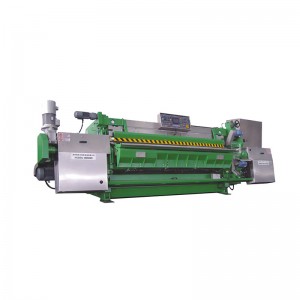
Splitting Machine Tannery Machine For Cow Sheep...
-
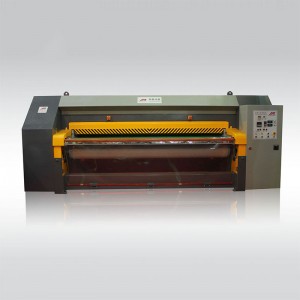
Leather Ironing Machine Tannery Machine For Cow...
-

Tannery Automatic Drum-Feeding Conveyor/Automat...
-

Machine Parts For Tannery Overloading Wooden Drum
-

Hang Conveyor Dry Leather Machine For Cow Sheep...
-
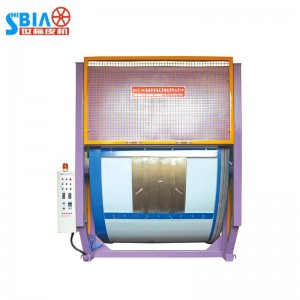
Stainless Steel Round Milling Drum For Cow Hide...
