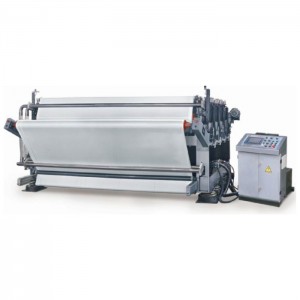
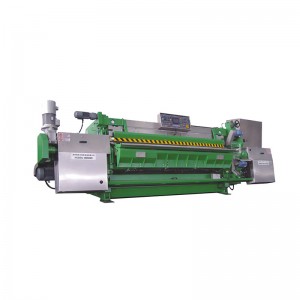
Leather Automatic Grading Machine
FEATURES
1. AI vision benchmarked to SATRA:Deep-learning models trained on extensive hide samples detect dozens of defect types—scars, veins, scratches, insect bites—eliminating subjective human error
2. Ultra-fast cycle:7–10 seconds per hide for contour scanning, defect detection, area calculation, and grading—far faster than manual inspection
3. Electronic hide code & lifecycle traceability:Each hide gets a digital record—defect map, grade, area—stored in the cloud for full traceability
4. Defect utilization & avoidance:Nesting automatically avoids defects or places acceptable defects in seam-hidden zones to maximize yield
PARAMETERS
| Wet blue / white hide Automatic Detection and Grading Integrated Machine | |
| Single Hide Detection Time | 15-20S |
| Host Configuration | i7-12700F, Graphics Card RTX4070S, 32G Memory, SN770-500G |
| Camera | Custom 8K monochrome industrial liner camera |
| Power | 3.5kW |
| Material | The machine body surface is treated with anti-corrosion paint, and the handrail is made of brushed 304 stainless steel. |
| Dimension | 4400×3200 ×1800mm |
| Weight | 2500kg |
APPLICATION
**Footwear:Upper and lining leather grading and pre-cutting inspection for consistent cut-part quality.
** Leather goods & bags:Incoming material grading and yield optimization for handbags, wallets, and luggage.
**Home furnishing:High-volume inspection of sofa and upholstery leather with integrated nesting and cutting.
**Automotive interiors:Standardized grading and defect data management for seat and steering-wheel leather.
·**Leather processing centers:Front-end quality gate for smart nesting/cutting lines, forming an integrated digital chain with nesting systems and cutters.
FAQ
Q1: Can the machine completely replace manual leather inspection? Is an operator still needed?
A: Not fully. The machine automates defect detection and grading, but an operator is still needed to review AI-marked results, add any missed defects, and approve nesting layouts. The role shifts from “visual judge” to “supervisor/validator,” significantly reducing training time.
Q2: Are there any requirements for leather types? Can it handle leathers of different colors and textures?
A: Mainstream machines handle full-grain, corrected-grain, suede, and embossed finished leathers. AI models are trained on multi-color, multi-texture samples and adapt to different colors and surface characteristics. High-end models like Comelz NEK+|BRAIN explicitly support smooth natural, embossed, and suede types. Color or material changes may require lighting calibration on some machines, but no model retraining.
Q3: Is daily maintenance of the equipment complicated? What is the service life of core components?
A: Maintenance centers on optical calibration and conveyor service. Typical cycles for industrial-grade machines: optical re-calibration every 6 months, annual conveyor inspection, and LED replacement at approximately 30,000 hours. Under two-shift operation, published service life is in the 7–10 year range. Daily care includes keeping lenses and light sources clean to avoid dust affecting image quality.