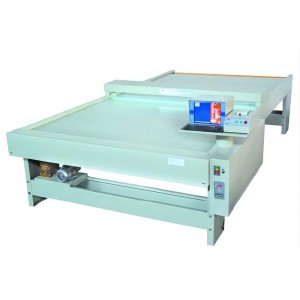
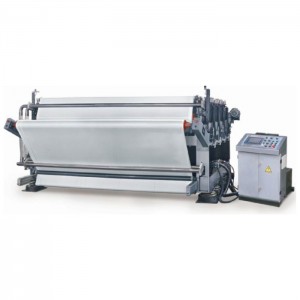
LEATHER TANNERY MACHINE-HAIR FILTER
FEATURES
1. Efficient Separation & Dewatering
A stainless steel wedge-wire or perforated screen combined with screw conveying and pressing rapidly separates hair from the liming bath. The discharged hair achieves a residual moisture content of **40–50%**, significantly reducing volume for storage and disposal.
2. Corrosion Resistance & Anti-Clogging Design
All wetted parts are constructed from **316L stainless steel**, resistant to the high alkalinity and sulfide content of liming liquors. Nylon brushes or special scrapers mounted on the screw flights continuously clean the screen surface during operation, preventing hair from blinding the filter holes and maintaining stable flow rates.
3. Chemical Liquor Recycling**
The filtered liming liquor (containing active lime and sodium hydrosulfide) is pumped directly back to the drum. Measured data shows that with a hair filter recycling system, **COD in the effluent drops from approximately 85,000 mg/L to 30,000 mg/L**, with corresponding reductions in sulfides and suspended solids, substantially easing end-of-pipe treatment loads.
4. Compact Integrated Design
Filtration, conveying, press dewatering, and return pumping are integrated into a single compact unit. It can be installed directly beside the drum or beneath the operating platform. Gravity feed (when drums are elevated 100–200 cm) or pump feed is available to suit existing line layouts.
PARAMETERS
| Liming with filter | Traditional liming | |
| C.O.D. | 30000mg/L | 85000mg/L |
| Sulphides | 940mg/L | 2944mg/L |
| Suspended solids | 40mg/L | 130mg/L |
| IWZH500-1 | WZH500-2 | |
| Mode | IWZH500-1 single hair filter | WZH500-2 double hair filters |
| Remove hair capacity | 2000kg/h, 50% moisture | 4000kg/h, 50% moisture |
| Motor power | 3kW | 6kW |
| Pump | 1500L/Min | 3000L/Min |
| Water requirement | 80L/Min at 3 bar pressure | 80L/Min at 3 bar pressure |
| Weight | 500kg | 900kg |
| Dimension | 2050×850×2350MM | 2050×1500×2350MM |
APPLICATION
Liming / Unhairing: Separates cattle hair, wool, and epidermal debris from the lime bath, keeping the liquor clean and extending its service life
Hair-Saving Unhairing: In hair-saving systems, recovers intact hair as a by-product (e.g., for felt production) while preventing hair from entering the wastewater stream
Liming Liquor Recycling Loop: Serves as the filtration unit in a drum recycling circuit, maintaining chemical concentration through continuous online filtration
Leather Wastewater Pre-treatment: Intercepts large suspended solids and hair debris before the main treatment system, protecting downstream equipment
FAQ
Q1: How is this different from a standard micro-screen filter?
A: Standard micro-screens are typically used for final effluent polishing or low-solids separation. The leather hair filter is engineered for the **high-alkali, high-sulfide, high-hair-load** conditions of liming baths. It features corrosion-resistant construction, positive self-cleaning brushes, and press dewatering. Its primary goal is **chemical liquor recovery**, not merely wastewater clarification.
Q2: What is the moisture content of the discharged hair? Can it be disposed of directly?
A: After screw pressing or cone compression, the hair typically contains **40–50% moisture**. At this level, no free liquid drips during handling, and it can be bagged or sent directly to solid waste processing. Transport costs are reduced by more than half compared to wet hair.
Q3: Will the equipment be attacked by lime or sodium sulfide?
A: Standard wetted parts are **316L stainless steel**, with alkaline- and sulfide-resistant seals. Under normal liming concentrations and temperatures, long-term stable operation is achievable. Material grades should be confirmed at the time of order based on actual sulfide levels and temperature.
Q4: Does the screen require frequent manual cleaning?
A: No. During operation, brushes or scrapers on the screw flights continuously clean the screen surface, maintaining filtration capacity. Only a brief rinse-down and inspection is needed between batches. Maintenance effort is minimal.
Q5: How many drums can one filter serve?
A: Depends on drum volume and filter model. Small-to-medium units typically serve 1–2 drums. Larger models can be valved to sequentially handle discharge from multiple drums, providing multi-drum coverage from a single unit.